Introduction


My name is Phoebe Hung and my candidate number is 8017. I completed brief 1: music industry. I worked with Georgina Harper-Dennett (8720) and Gabriel Meytanis (8560). To see my work, please click on the 3 labels on the right named A2 Research and Planning, A2 Construction, and A2 Evaluation.

This is our music video

This is our music video. Please view it in 1080p for optimal experience.

My Music Video

Front digipak text

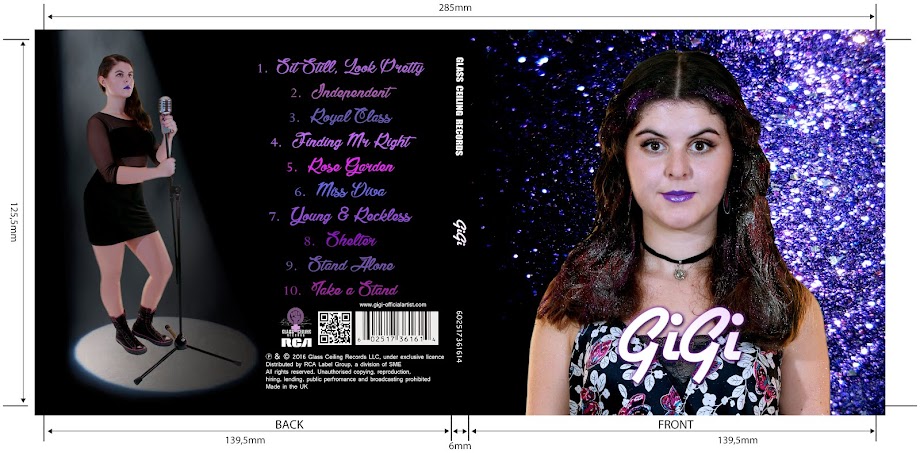
These are the front panels of our digipak album cover:

Digipak front cover image

Digipak front cover image

Inside digipak text

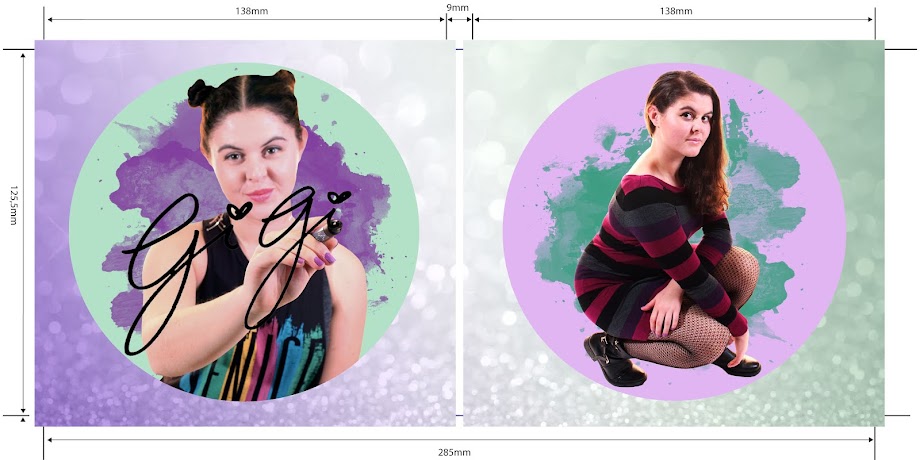
These are the inside panels of our album digipak:

Digipak inside cover image

Digipak inside cover image
Our website:

Please click on the image below to enter the site


Wednesday, 3 February 2016

R&P post 15: Our planned filming location/set design/props

Our planned filming locations

For the house scenes, we plan to shoot in Alex's house, which is located in East Finchley. For the nature scenes, we plan to shoot at Bowyer's Water, located in Hertfordshire outside of London.

Georgina took photographs of the area surrounding the lake and shared it with our group so that we all could visualise the setting and could, therefore, come up with ideas to suit a location. I made a gif of the photos that she took, which can be viewed below:


While planning our opening sequence, one of the first decisions that we made was that we would film at Bowyer's Water as it is located near Georgina and we all agreed that the lake and the forest offered extremely aesthetic scenery. We also decided to film in Alex's house as we needed interior shots to establish Craig's character in his daily routine and his living space. Despite being closer to the lake, Georgina's house would be too small to film in, which would affect the positioning and movement of the camera. It would also be hard to bring props and dress Georgina's room to look like one of a teenage boy's as we had a limited amount of time. In general, it would have been impractical to film in her house. Alex's house was large enough to film in and his room was already a typical teenage boy's room, meaning that we could easily bring props to enhance Craig's character.

Our set design and props list

Props - Craig's notebook
As a group, we decided on the props that we would use to bring out Craig's quirks and explore his interests. After establishing that Craig was introverted, we brought about the idea of the notebook, which Craig would carry around with him throughout the opening sequence. The notebook allows him to reflect and express himself in a way that he can't do with other people. We got vintage film posters and used a vinyl record player that Alex already owned to show Craig's artistic creativity. I think that the props that we used really reinforced Craig's personality and brought his character to life.
Using our group ideas, Georgina constructed a set list which incorporated props. It is organised in terms of location with a picture and description of the set. The props are identified in the last column, which we circulated around the group so that we could bring the props to the shoot.


Overall the locations, set and props that we used worked well for the aesthetics of our shoot. I think that a negative point is that we chose to film at the lake early in the morning so that we could catch the sunrise and have the optimum aesthetics for our shoot with the sun over the lake. We didn't take into account the temperature at that time of day so our group members and actors were freezing cold during the shoot. Despite this, we kept our morale up and had fun during the shoot.

R&P post 14: Our call sheet

We produced a call sheet to ensure that we are organised and so that our main shoot goes smoother than our test shoot. We learnt from the mistakes that we made during the test shoot and incorporated that into our call sheet.

We detailed exactly when and where the individual actors would start and finish, the contact details for our group member and a specific timetable that includes lunch breaks and travel. We also communicated directly to the actors and to each other about meeting times: Georgina made a journey planner directing the way to her house so that it would be easy for us and the actors to arrive there.

This is the call sheet that Alex and Olamide created:

If I were to redo the call sheet, I would put in a health and safety brief for the actors' wellbeing and I would conduct a risk assessment, especially since we were using expensive filming equipment and it was important that they didn't get damaged. I would also create a more developed timetable that would include short breaks to rest because this would give the actors and crew members incentive to finish on time.

R&P post 13: Our shoot-board

The shoot-board enabled our group to order our shots so that we could shoot more efficiently. Essentially, it is the order in which we would shoot on the day of filming, but not the chronological order of the finished sequence.

This is an example of how we constructed our shoot-board:
Our initial shoot-board for our test shoot

The four of us worked on a section each so as to complete the shoot-board quickly and methodically.

We grouped the shots into separate locations and sets so that we could shoot as much as possible without having to change camera framing or positioning. We produced our shoot-board by creating a gridded table, adding the photos of the post-it-notes and filled in the location, actors, props, and the proposed timings for each shot. We allocated the jobs of director, camera and sound beforehand because we thought that it would save time. However, this proved not to be the case as on the day, it was changed to save time during the shoot.

Our revised shoot-board for our main shoot


The shoot-board was essential to the planning process as it allowed us to manage our time; we appointed break times ahead of time and during the shoot, we could see if we were on schedule or not. Our initial shoot-board for the test shoot was revised for the main and back up shoots.

R&P post 12: Our animatic

We produced our animatic by taking live still photos of the events that would occur in our film opening. We referred to the drawings that we did on post-it notes for our storyboard, bearing in mind shot types and framing. We used Adobe Premiere Pro to add the shots to the timeline, cut them down with the razor tool, add music, voiceover and titles.

Our animatic:


The animatic made it easy to identify continuity errors which we corrected by adding new shots to make the sequence continuous. After viewing the animatic as a group, we made notes on what to change and also got feedback from staff that would improve continuity in our sequence.


Our target audience pointed out that it was very out of the ordinary for teenagers to be walking in the forest when typically, they'd be indoors on their phones. We decided that we would give our characters a sense of purpose when they are walking. For example, Craig has his notebook and wants to be alone and contemplate in solitude, David is just strolling through the park on his phone and the bullies are loitering and being loutish.

Overall, I found the animatic very useful. However, because it is composed of still shots, we could not convey the movement that we had planned for and so some shots linger for a longer time than is necessary.

R&P post 11: Our timeline and storyboard

Our timeline

We produced a timeline so that we had a fixed order of events. We took A3 sheets of paper and selotaped them together to form the base for the timeline. We split it into 3 sections for the video track, the audio track and the dialogue. In the video track, we noted down what visuals we needed to include, for example setting or character movement. Part of the process included blocking out the actions so that we could estimate how much time each action would take and how long the shot would be. For the audio, we marked down when the music track would begin and end, and when we would have the white noise effects. For the dialogue, we recorded how long it would take to read out the voice over and the argument. We then decided when the voice over would best go with the video and how the dialogue would fit with the conflict scene.

The beginning of our timeline

Our timeline
Our storyboard

To create our storyboard, we drew our shots on post-it-notes and stuck them on a large piece of sugar paper. We referred to the timeline for the order of our shots. As our work was still in progress, the post-it-notes allowed us to add new ideas and move the shots around until we were satisfied with the finished product. For our group, we came up with new shots often and had to revise our existing order. We had to add many new shots in order to keep a continuous flow throughout the film opening. Overall, I am happy with our group's work as we worked together well to propose more creative concepts although our end product was different from what we initially planned.

Georgina and I holding up the storyboard
The different colour for the post-it notes represent the shot type, taking into consideration framing. This makes it easy for us to identify the varying shot types, which is a typical convention in films.

The storyboard
Long Shot
Close Up

In my opinion, the storyboard was more useful than the timeline because the visuals were immediately clear. We knew straight away what type of shot and framing it was and we could easily redraw the notes replace shots we weren't happy with. Although I had put down exact timings for each shot in the timeline, our final product was very different in terms of the length of shots. Therefore, the timeline wasn't utilised to its potential and wasn't of much use to us.

Monday, 4 January 2016

R&P post 10: Reflections so far/ looking ahead

Reflections so far

I think that our group has worked together very well. From the first meeting, we immediately delegated roles and tasks for individuals to do. We researched existing films' codes and conventions in our own time and made decisions as a group in our meetings regarding titles and the script etc. Our group has worked efficiently to finish the timeline, storyboard and animatic. We spent a lot of time brainstorming ideas and trying to come up with creative ways to film. For example, we established earlier on in our meetings that Alex and Olamide had GoPros that we could use to film surreal shots. I suggested that we could pour cereal onto the GoPro as a part of the character's daily morning routine. Many of our initial ideas did not make it to the final cut because we were constantly communicating with each other about new ideas and critiquing films like 'Submarine', 'Beautiful Thing' and 'Elephant'.


Looking ahead

I look forward to shooting our film opening. We will experiment with the logistics of filming, bearing in mind space and lighting. I particularly look forward to editing, which I think that I am most comfortable at doing as I know the basics from my previous experience with the preliminary task. I think that it will be interesting to see how our research will affect the rest of our sequence and whether or not our inspiration will be apparent in our finished piece.

R&P post 9: Our script

We wanted to introduce our main character to the audience in a direct way that would immediately reveal his personality. We felt that a voice over would do this effectively. 'Submarine' heavily influenced our script for the voice over as Oliver Tate's character was easily identifiable. We deliberated over the script for a long time because we had to take into account the timings and how the visuals would correspond with the voice over.

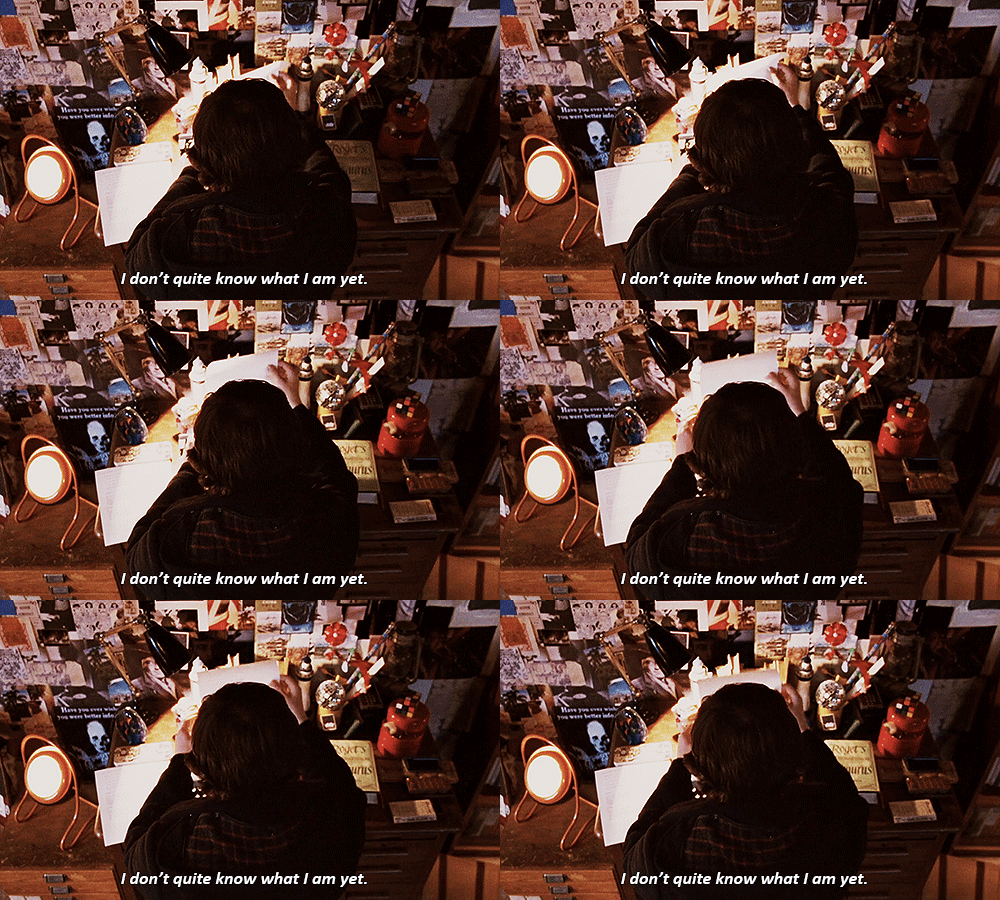
This is an example of something in Submarine that influenced what we put in the script:


Olamide wrote the treatment and our team gave critic. We will edit the treatment as time goes on but for now, this is the first draft for our script:


After revising the script many times, Olamide wrote this script which is the final version that we used in our main shoot.


The script was a difficult aspect of our planning process because we all knew how important the script was to conveying Craig's personality to the audience. We wanted to avoid making Craig appear weak or vulnerable due to his sexuality, as this would be a negative representation of sexuality. On the other hand, we tried to make it clear that it was part of his character as a socially awkward person. We also wanted to make the bullies authentic and used slang that would typically be used in order to add to the realism of the situation. Whilst many British indie films are known for their gritty portrayal of realistic events and often would contain swear words, we tried to omit as much offensive language as we could and replace them with milder words.